Berwyn Firefighters Practice Their Specialized Rescue Techniques
By News Desk
September 22, 2018
Firefighters from Berwyn Fire Company spent the day honing their very specialized set of skills. Members of Berwyn’s Specialized Rescue Teams traveled to the Delaware County Emergency Services Training Center to put themselves through the paces when it comes to Rapid Intervention and Confined Space Rescue. This training is just one of the many that the members do to remain proficient at these very demanding and technical skill sets. Among the countless scenarios that firefighters can face when going to a fire, “Rapid Intervention” is one of the most mentally and physically challenging that they can find themselves up against. The Rapid Intervention Team (RIT) goes in to service when “one of our own, another firefighter, becomes trapped or lost while inside. When firefighters are battling a fire, they can become disoriented, lost in the smoke, fall through a floor, run out of air, or any other number of possibilities. When this happens, a “MAYDAY” is sounded and the RIT team goes in to service to rescue them. Saving one of our own can be one of the most challenging things we’ll face. There’s the inherent emotional stress of one of our coworkers/friends being injured and in danger, but firefighter victims also present some very unique challenges. Anything ranging from extremely hazardous and volatile environments, to the difficulties presented by trying to rescue a firefighter in close to a hundred pounds of extra gear. Berwyn members are also a part of the Chester County Technical Rescue Task Force with responsibilities for Confined Space operations and Medical Support. Confined Space operations present many challenges as well. It could be anything from a worker trapped in an industrial storage tank and overcome by hazardous fumes, or a worker having a medical emergency, like a heart attack, in one of these spaces and not being able to evacuate. Confined Space team members have to be able to perform atmospheric monitoring, mitigation of environmental hazards, and be able to effect very technical rescues using specialized rope rigging and hardware.
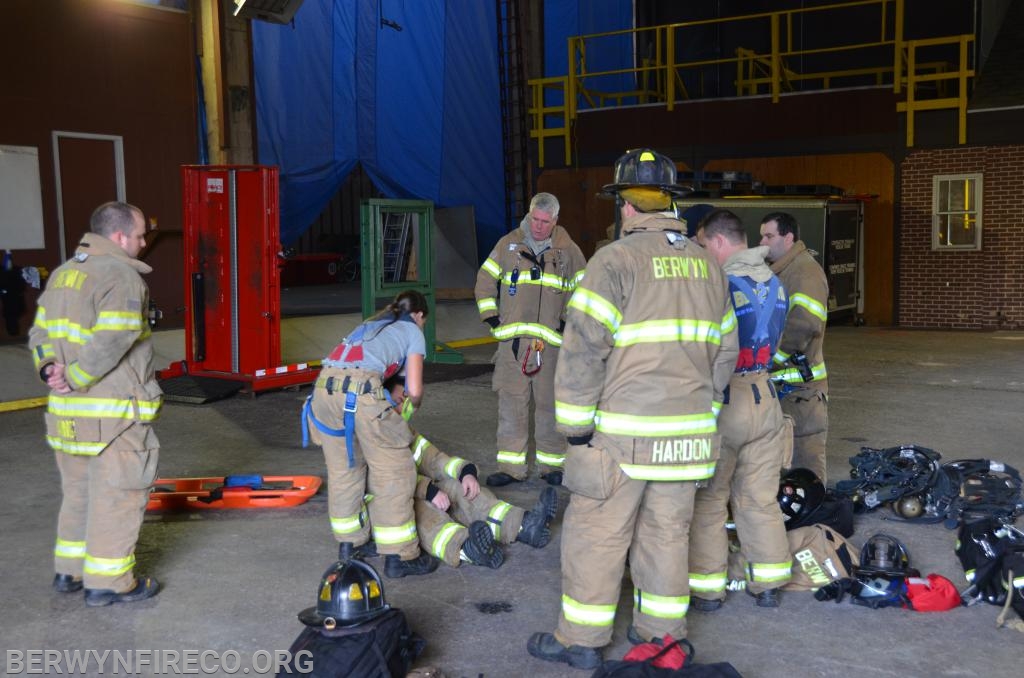
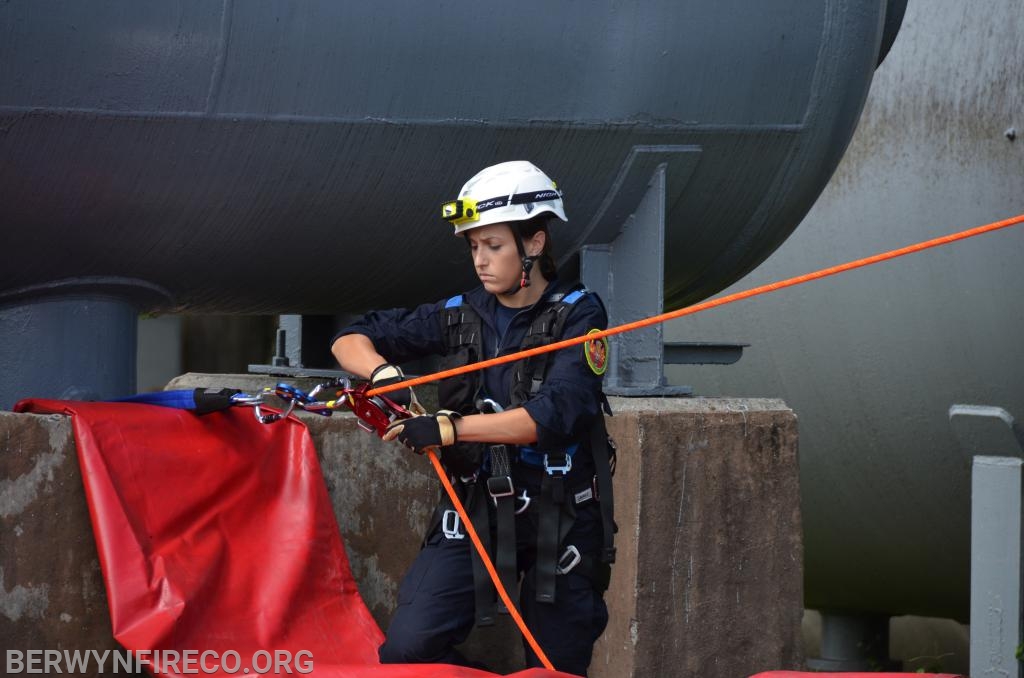
Firefighters reviewing the use of the Multi-Loop Rescue Strap and FAST Board in RIT operations.
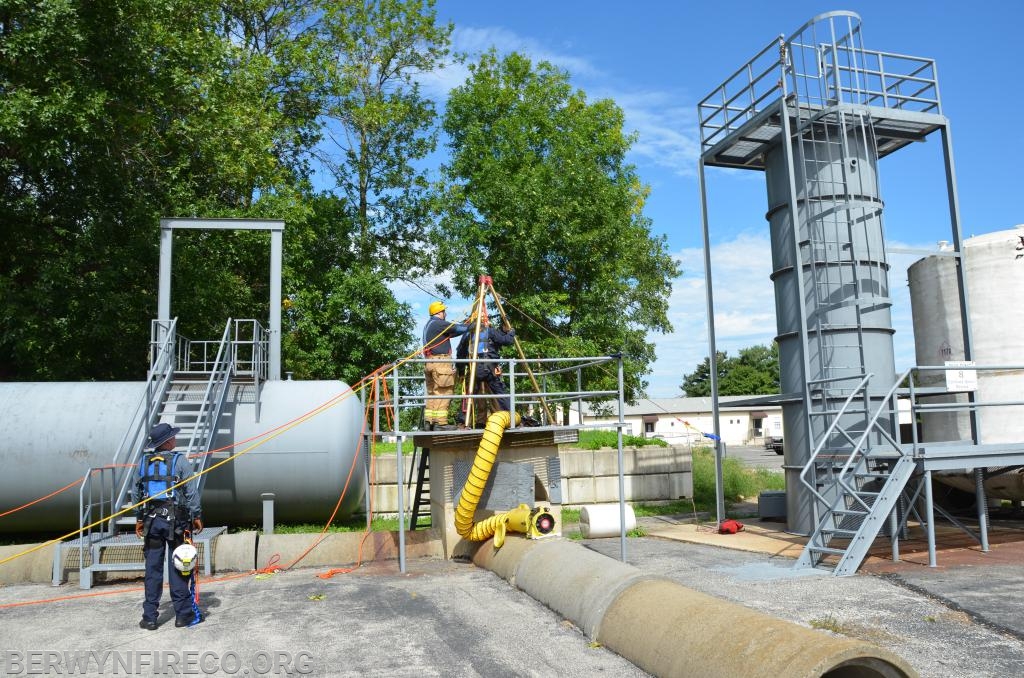
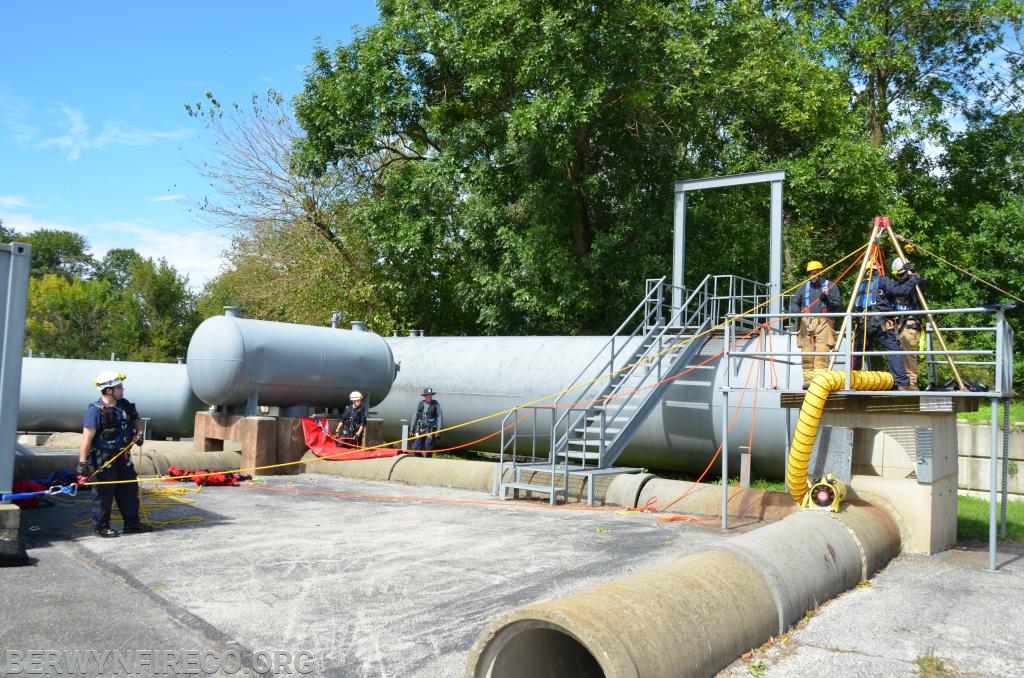
Preparing to lower rescuers into a confined space via tripod. The tripod provides rescuers a "high point" for rigging pulleys and other hardware used to execute their tasking.
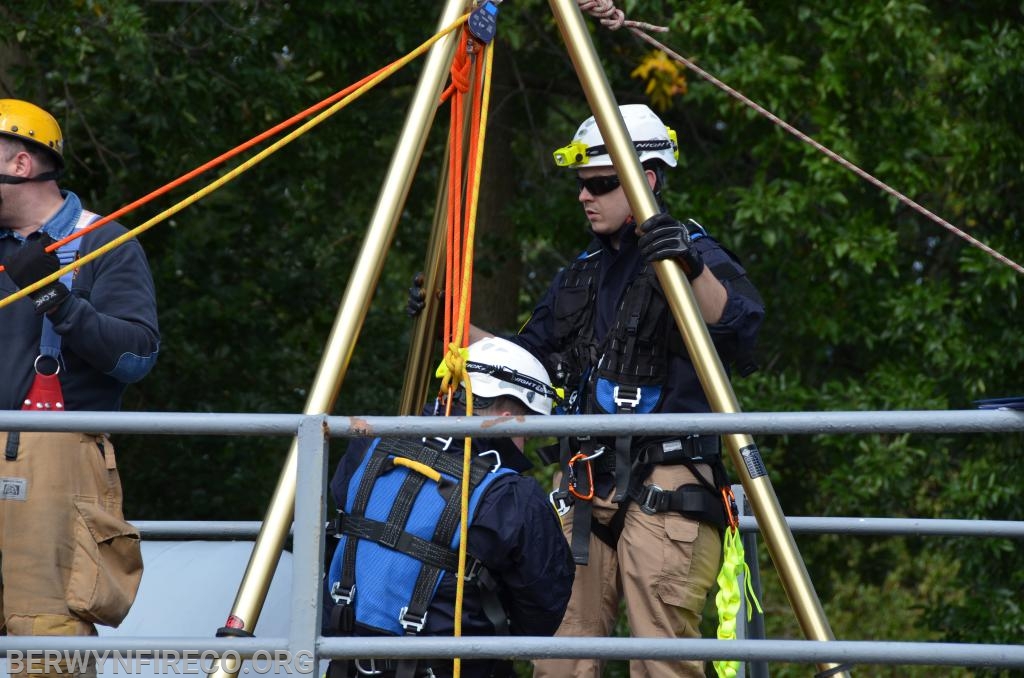
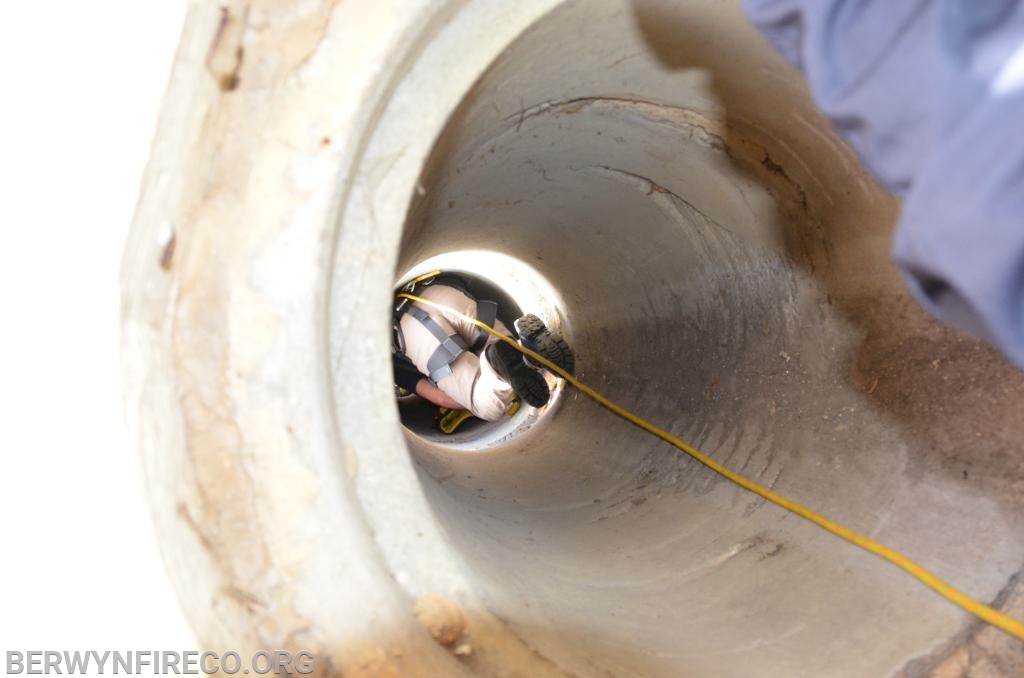
Confined Space members lower rescuers into the space.
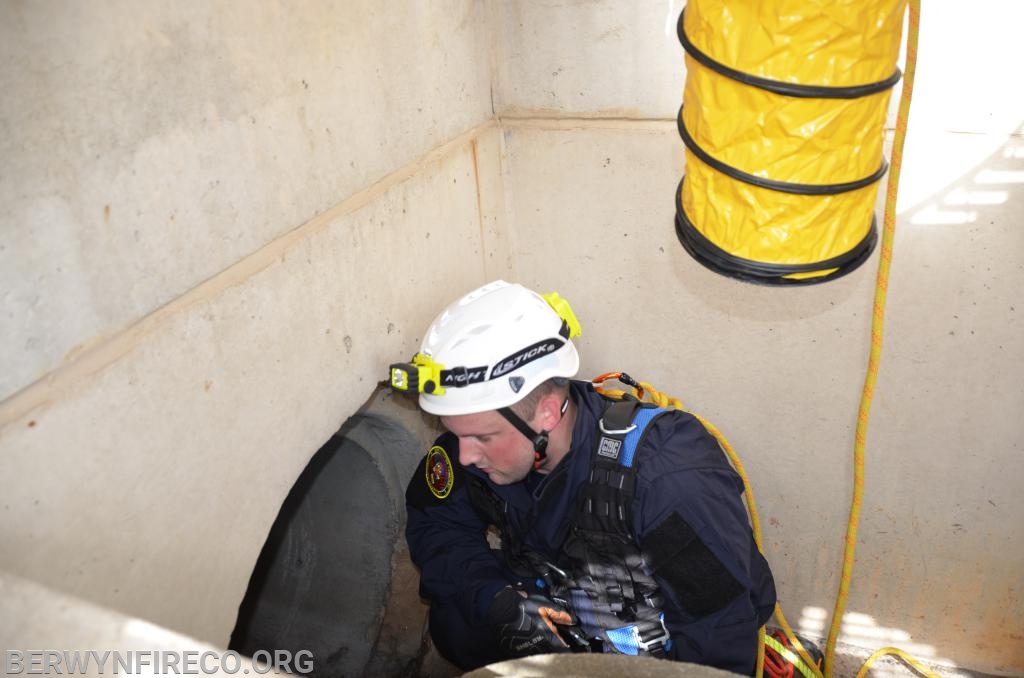
Rescuers prepare to gain access to the "victim". The yellow cylinder in the top right of the picture is part of a ventilation system that is used to introduce "good" air and remove "bad" air from the environment. Typically, in an actual confined space emergency, rescuers will be on a "supplied air" system to reduce the risk of inhaling hazardous chemicals. The ventilation system would also have the task of trying to mitigate any type of atmosphere that would potentially be explosive due to chemicals in the air.
A firefighter tending a haul line that is used to lower and retrieve the rescuers and the victim from the confined space.